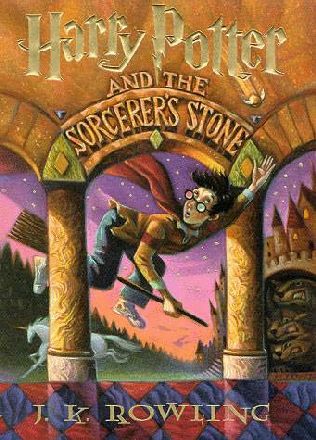
Author: Rowling, J.K.
Illustrator: Grandpré, Mary
Publisher and Date: Scholastic, Inc., 1997
Genre: Fantasy, Novel
Age Range: 4th-6th
Summary: Harry Potter is a young boy who lives with his Aunt, Uncle, and cousin Dudley Dursley on Privet Lane. His parents were killed by the infamous you-know-who (Voldemort) when Harry was just a baby, and the Dursley's were the only family he had left so he was left to live with them in the muggle (human) world. Harry is overshadowed by his cousin Dudley all through their youth, up until Harry's 11th birthday when he receives numerous letters from Hogwarts, despite his Uncle's attempts to destroy them, inviting him to come to school for the next term. Hagrid comes to rescue harry from the hut on the rock at midnight on his 11th birthday and they stop by Gringots to get Harry's money (and something from a secret safe for Hagrid) before they go shopping for Harry's school supplies in Diagon Alley.
On the way to Hogwarts, Harry meets Ron Weasley and Hermione Granger who become two of his best friends at Hogwarts, and they are all sorted into the House of Gryffindor. Draco Malfoy, on the other hand, is someone Harry learns to hate rather quickly. Draco thinks he is better than Harry, or anyone at all for that matter, and constantly teases and taunts Potter and his friends. Harry and his friends befriend Hagrid and have many adventures while they are at Hogwarts, despite Malfoy's attempts to ruin it for them. While getting caught flying on his broom when he wasn't supposed to, Harry lands a spot on Gryffindor's Quidditch team as the new Seeker and the youngest player in centuries. When challenged by Malfoy to a wizard's duel, Harry, Ron, and Hermione find Fluffy in the forbidden corridor on the third floor. On Halloween when a troll was wandering the halls of Hogwarts, Harry and Ron go to warn Hermione who has been in the girls' room crying, and end up saving her life. One night, while using his invisibility cloak, Harry finds the Mirror of Erised which shows him his family. Harry and his friends find out about the sorcerer's stone and that Nicolas Flamel is the only one who has one, which is guarded at Hogwart's by Fluffy and other spells from Professors at the school. Hagrid brings a dragon egg home from a bar one night which Harry and Hermione sneak up on top of Hogwarts for Ron's brother's friends to take with them since dragons are illegal at Hogwarts. Harry, Hermione, Neville, and Malfoy get detention for being out the night they got rid of the dragon and have to go into the forbidden forest to find a unicorn that has been hurt. There the group meets who they later find out to be Professor Quirrell, drinking the unicorn's blood in order to keep his other 'face' alive for just a while longer. At the end, Harry, Ron, and Hermione save the school from Professor Quirrell, and ultimately from Voldemort taking over. From the spells they learn, they are able to work together to get past Fluffy, Devil's Snare, the flying Keys, a life-size game of chess, a knocked-out troll, a line of bottles, and to the sorcerer's stone itself which the Mirror of Erised showed to Harry. Dumbledor comes to Harry's rescue in time, not allowing Voldemort to do enough damage to Harry to kill him, and Harry becomes the hero of the school and even more famous. The book ends with all of the students going back home, some to the muggle world, for the summer where Harry is looking forward to the fact that Dudley doesn't know he isn't supposed to use his magic away from Hogwarts.
Response: I had always heard how much better the books were than the movies and wasn't sure if I'd really ever think the same. After reading the first book I want to read entire series, which I'll probably get started on this summer. The description in the book is incredible and I loved every minute of it!
I think the power of love is such a strong theme in Harry Potter. The reader knows all throughout the book that Harry's parents had cared for him and did love him because they didn't just send him to live with the Dursleys, they were killed by Voldemort and that was the last option for the time being. His parents were well off and had money for Harry when he did get to Hogwarts, so their love for him is shown in this way as well. However, it isn't until the end of the book when you see the true power of the love Harry's mother had for him. When Voldemort knew Harry had the stone and tried to escape with it, he screamed at Quirrell to 'SEIZE HIM' and 'KILL HIM' but the moment Quirrell touched Harry's skin, his began to blister in pain. Dumbledore explains why this happened on page 299. He says to Harry, "Your mother died to save you. If there is one thing Voldemort cannot understand, it is love. He didnt' realize that love as powerful as your mother's for you leaves its own mark. Not a scar, no visible sign...to have been loved so deeply, even though the person who loved us is gone, will give us some protection forever. It is in your very skin. Quirrell, full of hatred, greed, and ambition, sharing his soul with Voldemort, could not touch you for this reason. It was agony to tocuh a person makred by something so good."
There are all sorts of rule-breaking and rebellious characters in this book. The first that come to mind are the Weasley twins, two of Ron's older brothers. They loved to find secret passageways at Hogwarts and joked with their mother about sending her a toilet seat from school (which they actually did send to Harry at the end). Harry had numerous times when he was breaking the rules. He flew on the broom his first time without Professor McGonagall there, was a first year who played on the Quidditch team, had his own broom, snuck out many times with the use of his invisibility cloak, went to save Hermione with Ron while the troll was loose, and even went to the forbidden chamber on the third floor in order to save the school from who he thought to be Voldemort. Hagrid and got his own dragon, fully aware of the fact that they were illegal and used his magic when he came to get Harry in the muggle world.
Teaching Ideas: This book could be used in a language arts lesson in a couple of ways. Since the characters use different spells to open doors, make things float, change something into something else, etc. students could create their own spell. Have them write down what hte spell is and write a story about what situation they would use it and what it would do. They could also draw a picture to go along with it.
In using the Mirror of Erised, Harry saw his family because that was the deepest desire of his heart. Give students a "mirror" printout and have them draw what they would see in their Mirror of Erised. In addititon to the picture, students will also write a short story explaining why they would see what they drew.
For a science lesson, students could learn about owls and dissect owl pellets. If actual owl pellets are not available for the students to use, take them to www.kidwings.com where they can virtually dissect an owl pellet. This might be a little easier on some students anyway! On the site it has different bone parts labeled and will say the name of them when you click on it. As you pick bones out and drag them up to the matching picture, it builds the animal the owl has eaten.
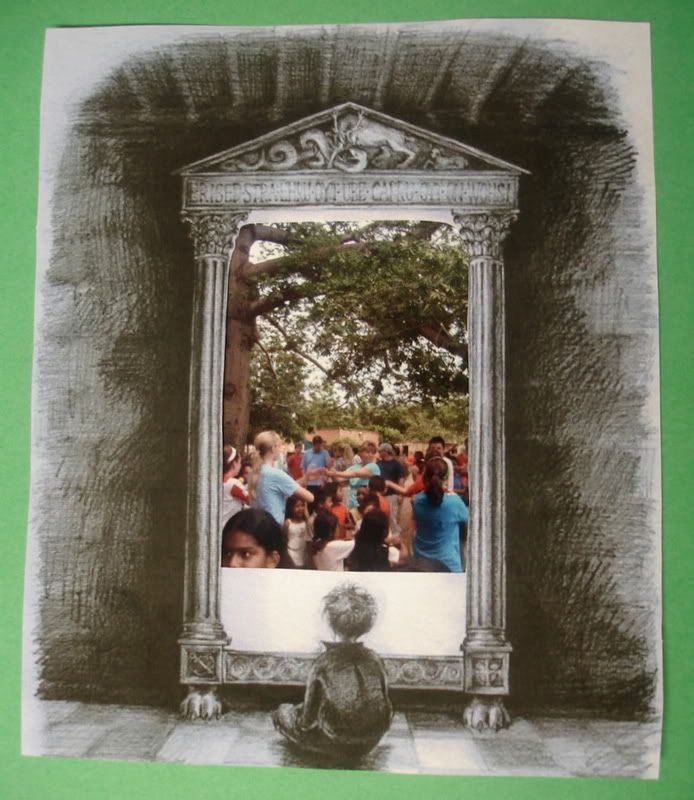
The Mirror of Erised in Harry Potter shows the one who looks in ‘the deepest, most desperate desire of their heart. Harry was able to see his family, whom he had never met and at the end it showed him finding the Sorcerer’s Stone. If I were to look into the Mirror of Erised, I would see myself in Venezuela, like in the picture below. The deepest, most desperate desire of my heart is to serve the Lord in missions. I love the children and being able to play with them and talk with them the most. I can’t wait to travel all over to do this, but especially to more remote and poor areas like the communities I have been to in Maracaibo, Venezuela.